A wedding buffet can be a great alternative to a formal sit-down meal, especially if you want your reception to feel relaxed and give guests plenty of choice.
And wedding buffets don’t have to mean a table of sandwiches and sausage rolls. You can keep things traditional, create a colourful grazing-style spread, serve hot dishes, set up different food stations or combine several ideas.
If you’re planning your own wedding buffet, here are some ideas for what to serve, how to organise it and the practical things that are easy to overlook.
Cold Wedding Buffet Ideas
A cold buffet is one of the simplest options if you’re organising much of the food yourself because you don’t need to keep everything hot throughout the reception.
You could include:
- sandwiches and wraps with different fillings
- mini rolls and filled croissants
- sausage rolls
- pork pies and mini pies
- quiche
- cooked sliced meats
- cheese
- Scotch eggs
- chicken pieces
- mini samosas and bhajis
- falafel
- olives
- houmous and other dips
- crudités
- potato salad
- pasta salad
- couscous
- mixed leaf salads
- coleslaw
- fresh bread and rolls
You don’t need everything on the list. In fact, a smaller selection of foods that work well together can be much easier to manage than an enormous buffet with dozens of different dishes.
Try to include a mixture of substantial foods, lighter sides and vegetarian choices.
Finger Food Wedding Buffet Ideas
Finger foods are particularly useful for a relaxed reception where people will be moving around and chatting rather than sitting down for a formal meal.
Ideas include mini sausage rolls, cocktail sausages, chicken skewers, vegetable skewers, mini tartlets, samosas, spring rolls, falafel, mini sandwiches and wraps.
You could also create small individual portions of things such as salad or antipasti rather than serving everything from large bowls.
One advantage of finger food is that guests can try several things without filling their plates with huge portions.
Just remember that small doesn’t necessarily mean inexpensive. Making hundreds of individual items can involve a surprising amount of food and preparation.
Grazing Table Ideas for a Wedding
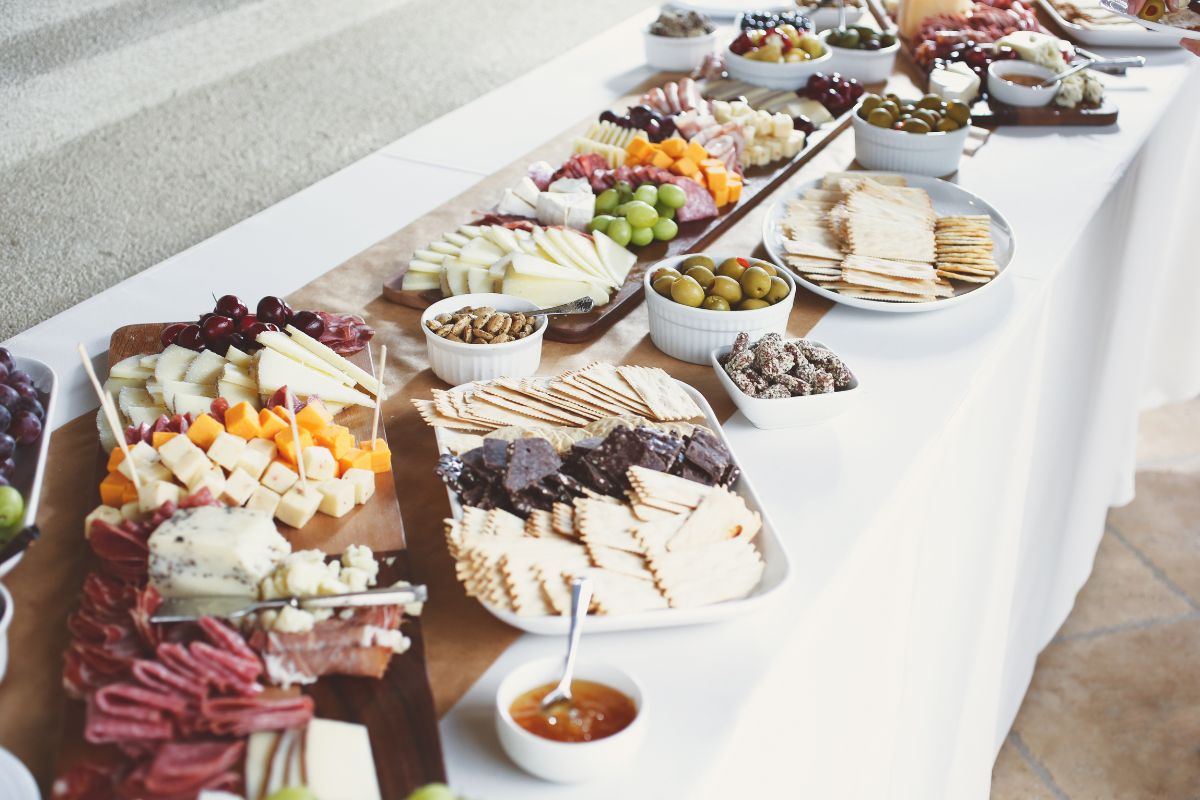
A grazing table is essentially a buffet arranged as an abundant display rather than in rows of conventional serving dishes.
You could use a mixture of:
- cheeses
- crackers
- breads
- cured meats
- olives
- dips
- vegetables
- fruit
- nuts
- chutneys
- pastries
- small savoury bites
Different heights can make the display more interesting. Cake stands, boards, serving platters and bowls can help create different levels.
Fresh herbs and flowers can also make a buffet table look more special, although make sure anything placed directly around food is suitable and safe for that purpose.
And don’t sacrifice practicality for the photograph. Guests still need to be able to reach the food!
Hot Wedding Buffet Ideas
If your venue has suitable catering facilities, you could serve a hot buffet instead.
Possible dishes include curry, chilli, lasagne, pasta bakes, pulled pork, baked potatoes or a simple roast-style buffet.
Another idea is to choose one main dish and offer several accompaniments rather than attempting to prepare lots of different hot meals.
For example:
Curry buffet
Chicken curry
Vegetable curry
Rice
Naan
Samosas
Bhajis
Chutneys and dips
Or:
Jacket potato bar
Baked potatoes
Cheese
Beans
Chilli
Coleslaw
Salad
Suitable vegetarian or vegan toppings
A build-your-own food station can make a fairly simple meal feel much more interesting.
Pizza Buffet
Pizza is another easy option for an informal wedding.
Rather than trying to provide dozens of different varieties, you could have a few familiar choices alongside salads, garlic bread and dips.
It’s worth thinking about how the pizzas will be kept at an appropriate temperature and how quickly fresh batches can be replenished.
A pizza van or mobile pizza caterer could also work well for an outdoor wedding where the venue allows external caterers.
Afternoon Tea Wedding Buffet
For an afternoon wedding, you could build the buffet around afternoon tea.
Think finger sandwiches, scones, small cakes, mini pastries and fruit, with tea, coffee and cold drinks.
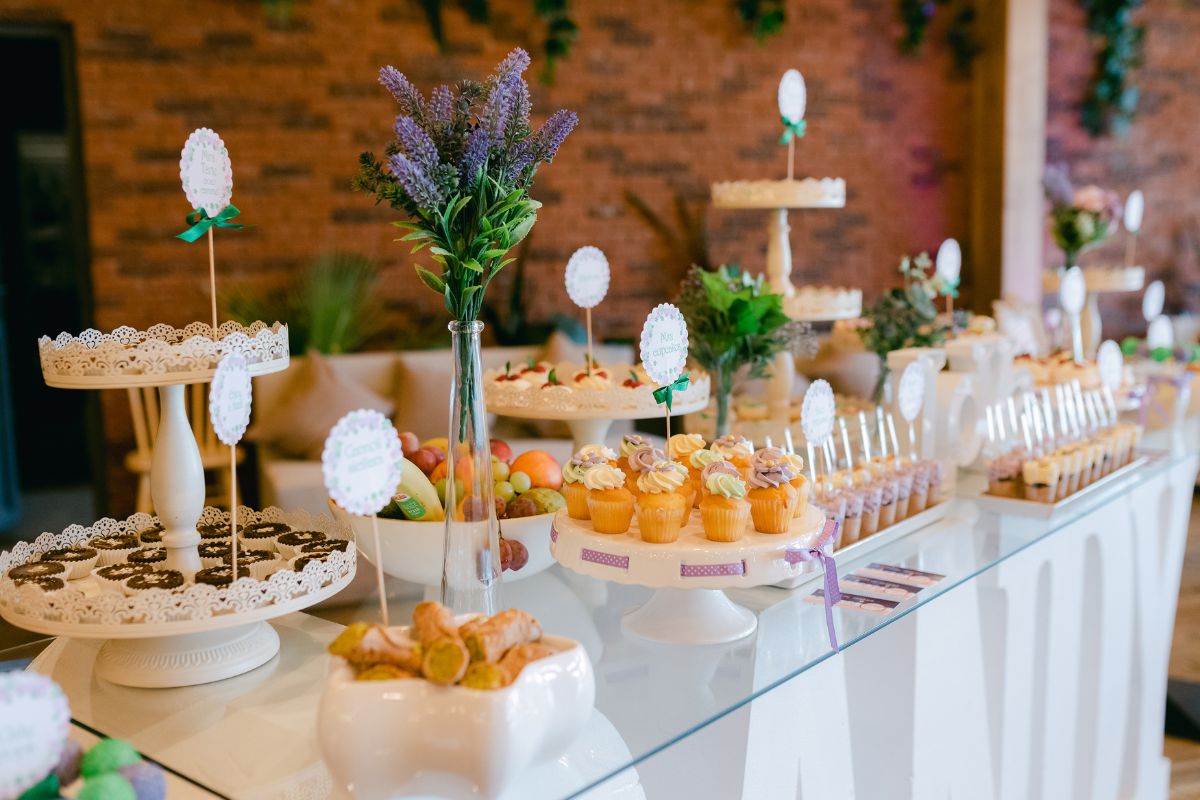
Cake stands work particularly well for this because they add height to the tables while making relatively simple food look more celebratory.
You could even use your wedding cake as part of the dessert selection rather than providing a completely separate pudding.
Wedding Dessert Table Ideas
Dessert is an easy area to have a bit of fun.
You might include:
- brownies
- cupcakes
- mini cheesecakes
- cookies
- doughnuts
- macarons
- traybakes
- fruit
- mini trifles
- sweets
A pick-and-mix sweet table is another possibility, particularly if there will be children at the wedding.
Provide bags or little boxes so guests can take some sweets away rather than having to eat everything immediately.
Don’t Forget Vegetarian and Vegan Guests
It’s worth making the vegetarian and vegan food part of the main buffet rather than treating it as an afterthought.
Falafel, vegetable samosas, bhajis, hummus, salads, breads and vegetable tarts can appeal to everyone, not just guests following a particular diet.
One practical problem with buffets is that popular vegetarian foods can be eaten by everyone before vegetarian guests reach the table.
If you know you have guests with specific requirements, make sure there’s enough appropriate food and consider keeping some portions separate.
Ask About Allergies Before the Wedding
This is one area where you don’t want to guess.
Ask guests about food allergies and dietary requirements when you’re gathering RSVPs.
If a professional caterer is providing the food, discuss the requirements with them and find out how they’ll identify dishes and manage allergens and cross-contamination.
The Food Standards Agency says UK food businesses must provide information about the 14 regulated allergens when they’re used in the food and drink they provide. Its current best-practice guidance recommends making written allergen information readily available and supporting it with a conversation about individual allergen requirements.
Even for a privately prepared DIY buffet where those business requirements may not apply in the same way, clearly identifying what dishes contain is a sensible precaution.
Don’t describe something as allergen-free unless you can genuinely be confident about its ingredients and preparation.
Use Food Labels
Little food labels are useful even when nobody has an allergy.
Instead of guests trying to work out what’s inside a sandwich or pastry, label the dishes.
You could use small tent cards, mini chalkboards or place-card holders.
Something as simple as:
Cheese & Onion Quiche – Vegetarian
makes the buffet much easier to navigate.
It can look lovely too, particularly if the labels match your invitations, place cards or other wedding stationery.
How Much Wedding Buffet Food Do You Need?
This is probably one of the hardest questions when planning a DIY buffet.
Unfortunately, there isn’t one reliable number that works for every wedding.
How much you need depends on factors such as:
- whether the buffet is replacing a full meal
- what time it’s served
- the type of food
- how many different dishes you’re offering
- the age and appetite of your guests
- whether you’re serving dessert
- whether there will be another meal later
This is why I’d be wary of generic internet rules such as “provide X pieces of food per person” without considering what those pieces actually are.
Six cocktail sausages aren’t equivalent to six filled rolls!
If you’re buying trays or platters from a caterer, supermarket or restaurant, use their stated serving quantities as your starting point and tell them exactly how many people you’re feeding. Caterers familiar with their own portion sizes should be able to advise you.
For a completely homemade buffet, make a guest list and work through the menu dish by dish rather than simply making enormous quantities of everything.
And include yourselves in the headcount. It’s surprisingly easy to spend so much time thinking about the guests that you forget the bride and groom need feeding too.
How to Arrange a Wedding Buffet Table
The way you arrange the buffet table can make a big difference once dozens of people approach it at once.
Start with plates and then arrange the food in a logical order.
Put cutlery and napkins towards the end so guests aren’t trying to hold them while serving themselves.
If you have enough space and a large guest list, consider whether people can access the buffet from both sides.
I’d also put drinks somewhere else if possible. Someone spending two minutes making a cup of tea can bring an entire food queue to a halt.
Likewise, the wedding cake and dessert table don’t necessarily need to be part of the main buffet.
What You’ll Need for a DIY Wedding Buffet
This is the bit that’s easy to underestimate.
As well as the food, you may need:
- serving platters
- bowls
- cake stands
- serving tongs and spoons
- tablecloths
- food labels
- plates
- bowls
- glasses or cups
- cutlery
- napkins
- drinks dispensers or jugs
- storage containers
- cool boxes or other appropriate chilling equipment
- suitable equipment for hot food
- rubbish bags and bins
- containers for leftovers
Before buying everything, check exactly what your venue provides.
There’s no point purchasing 100 plates and glasses if they’re already included in the venue hire.
And ask family members what they have. Cake stands, serving boards and large platters are the sort of things people often own but rarely use.
Wedding Buffet Food Safety
Food safety needs to be part of the plan from the beginning, particularly if you’re preparing food yourself.
Think about where everything will be stored before, during and after the journey to the venue.
Cold foods that need refrigeration shouldn’t simply be put on a decorated table in a warm room for hours because it looks nice.
Likewise, hot food needs appropriate equipment and temperature control.
Pay particular attention to foods such as cooked meats, dairy products, seafood, rice and dishes containing mayonnaise or cream.
If you’re hiring a venue, ask what refrigeration and food-preparation facilities you’ll actually have access to. Don’t assume there will be a huge empty fridge waiting for you.
For current UK guidance, it’s worth checking the Food Standards Agency rather than relying on wedding blogs or Pinterest graphics.
Food Standards Agency food safety guidance
Can a DIY Wedding Buffet Save Money?
It certainly can, but don’t assume DIY will automatically be cheaper.
Add up the complete cost:
food + serving equipment + tableware + storage + transport + refrigeration/heating + your time
Supermarket platters or a combination of bought and homemade food may turn out to be better value than making absolutely everything yourself.
There’s also the question of what you want to be doing immediately before your wedding.
Making 150 sandwiches at 11pm the night before probably isn’t the wedding memory you’re hoping to create.
A good compromise could be to buy the labour-intensive items and prepare only the easiest parts yourself.
Don’t Be Afraid to Keep It Simple
A wedding buffet doesn’t have to contain 30 different dishes.
A smaller menu that’s well presented, plentiful and suitable for your guests can work much better.
For example:
Simple cold wedding buffet
Sandwiches and wraps
Sausage rolls and vegetarian rolls
Quiche
Chicken pieces
Samosas and bhajis
Potato and mixed salads
Crudités and dips
Bread
Brownies and fruit
Wedding cake
That’s already a substantial selection.
Or forget the traditional buffet completely and build the meal around one theme such as pizza, curry, afternoon tea, baked potatoes or a grazing table.
The best wedding buffet isn’t necessarily the one with the most food or the fanciest display. It’s one where there’s enough to eat, guests can easily find something they like and you aren’t spending your entire wedding day worrying about whether the sausage rolls have run out.
Pin Me!