
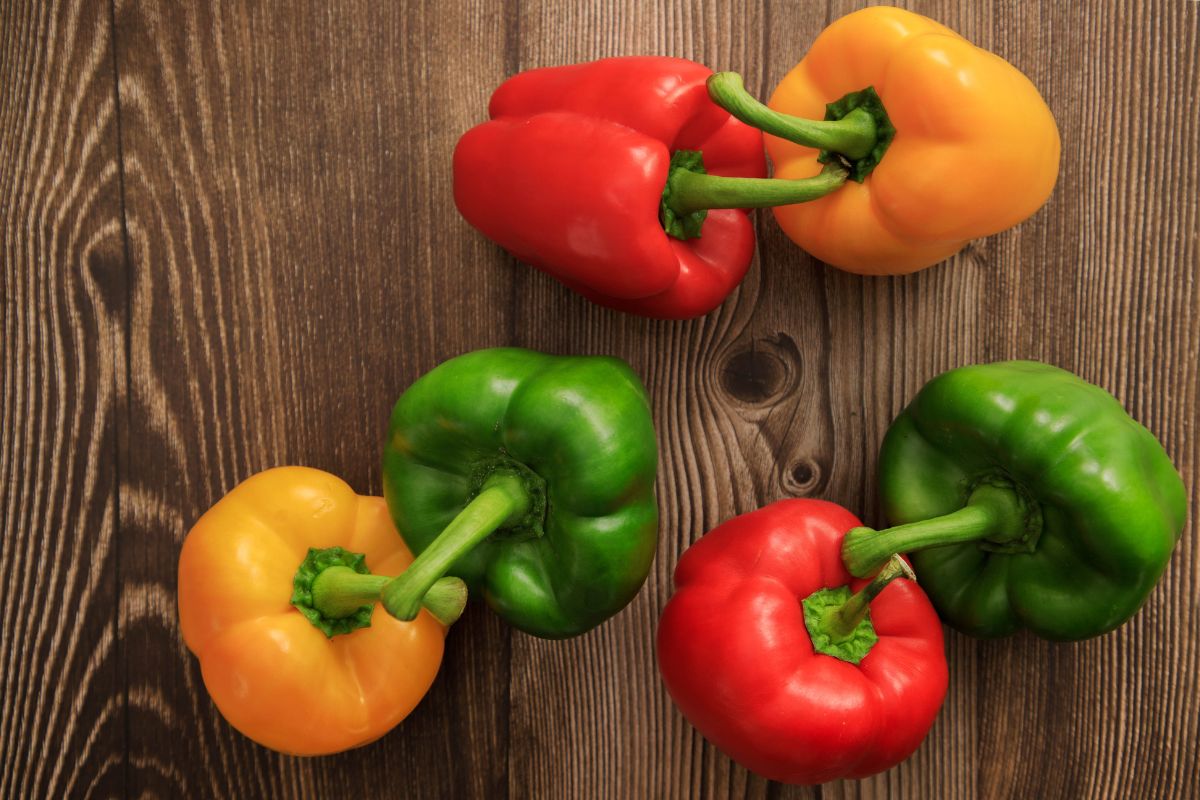
Red, yellow and green bell peppers are all popular ingredients in everyday cooking, but they aren’t identical when it comes to taste, colour and nutritional value.
Green peppers have a more savoury flavour, while red and yellow peppers are generally sweeter. They also contain different amounts of certain vitamins and antioxidants, which means each colour has something different to offer.
Whether you’re choosing peppers for a salad, stir-fry or roasted vegetable dish, here’s what you need to know about the differences and which colour works best in different recipes.
Are Red, Yellow and Green Bell Peppers the Same?
Yes, they are all varieties of the same type of vegetable, known as Capsicum annuum. However, their colours depend on the variety and how ripe the pepper is when harvested.
Most green bell peppers are picked before they reach full maturity. If left on the plant, many varieties change colour as they ripen, eventually becoming red, yellow, orange or another colour.
However, not all green peppers turn red. Some varieties are bred to mature to yellow, while others develop different colours.
This is why red and yellow peppers aren’t necessarily just different stages of the same pepper.
Green Bell Peppers
Taste: Crisp, slightly bitter and more savoury.
Green peppers are usually harvested before they are fully ripe. They have a firmer texture and a stronger, less sweet flavour than their fully coloured counterparts.
Nutrients: Green peppers provide vitamin C, vitamin K, vitamin B6 and fibre. They also contain carotenoids, including lutein and zeaxanthin, which are plant pigments associated with eye health.
Best dishes for green peppers:
- Stir-fries and noodle dishes
- Fajitas and other Mexican-inspired meals
- Chilli con carne
- Pizza toppings
- Sausage casseroles
- Stuffed peppers
Their less sweet flavour works particularly well in savoury recipes containing onions, garlic, spices and other strong ingredients.
Red Bell Peppers
Taste: Sweet, juicy and mild.
Red peppers are fully mature peppers from varieties that ripen to red. They taste sweeter than green peppers and are especially goodraw or roasted.
Nutrients: Red peppers are a particularly good source of beta-carotene, which the body can convert into vitamin A. They also contain vitamin C and other antioxidants, including capsanthin, the pigment that gives them their red colour.
Vitamin A contributes to normal vision and immune function, while vitamin C supports normal immune function and helps the body absorb iron from plant-based foods.
Best dishes for red peppers:
- Roasted vegetable trays
- Pasta sauces
- Homemade tomato and pepper soup
- Salads and sandwiches
- Stuffed peppers
- Grilled vegetables
- Roasted pepper dips
Their natural sweetness makes red peppers especially useful in recipes where you want a softer, sweeter flavour.
Yellow Bell Peppers
Taste: Mild, sweet and slightly fruity.
Yellow peppers are generally sweeter than green peppers, with a milder flavour than red ones. They have a juicy, crisp texture and are particularly popular in salads and lighter dishes.
Nutrients: Yellow peppers provide vitamin C, fibre and antioxidants. They contain yellow plant pigments called carotenoids, including violaxanthin. Some varieties are particularly rich in vitamin C, although the exact amount depends on the pepper.
Best dishes for yellow peppers:
- Fresh salads
- Pasta salads
- Vegetable kebabs
- Stir-fries
- Rice dishes
- Sandwiches and wraps
- Roasted vegetables
Their mild flavour makes them a useful all-rounder when you want to add colour without overpowering the other ingredients.
Red vs Yellow vs Green Bell Peppers: Nutritional Differences
All three colours are nutritious, low in calories and provide fibre, vitamins and antioxidants. However, the amounts of certain nutrients change as peppers mature, and different varieties have their own nutritional profiles.
| Nutrient or feature | Green | Yellow | Red |
|---|---|---|---|
| Vitamin C | Good source | Often particularly high | High |
| Beta-carotene | Generally lower | Varies by variety | Generally higher |
| Vitamin A activity | Lower | Varies | Generally higher |
| Other pigments | Lutein and zeaxanthin | Violaxanthin | Capsanthin and beta-carotene |
| Natural sweetness | Least sweet | Mildly sweet | Generally sweetest |
The figures are general comparisons, not guaranteed nutritional values. Growing conditions, variety and ripeness all affect the final nutrient content.
Which bell pepper has the most vitamin C?
All three colours contain vitamin C, but yellow and red peppers can have higher amounts than green ones. Yellow peppers can be particularly rich in vitamin C.
Which bell pepper has the most vitamin A?
Red peppers are generally the best choice for beta-carotene, which the body converts into vitamin A.
Are green peppers less healthy than red peppers?
No. Green peppers still provide useful vitamins, fibre and antioxidants. Red peppers contain more beta-carotene, but each colour has a different nutritional profile. Eating a mixture of coloured vegetables is a good way to benefit from a wider range of plant nutrients.
Can You Substitute Green Peppers for Red or Yellow?
Yes. You can use green, red and yellow peppers interchangeably in most recipes, but the finished dish may taste slightly different.
Green peppers have a stronger, less sweet flavour, so they are particularly suitable for spicy and savoury meals. Red peppers add more sweetness, while yellow peppers offer a milder flavour.
For example, if you’re making fajitas, a stir-fry or a casserole, green peppers will work perfectly well in place of red or yellow ones. However, if you’re making a roasted red pepper soup or sauce, green peppers will give you a noticeably different result.
If a recipe calls for a mixture of colours, you can also use whichever peppers you already have rather than buying a separate pack.
Which Colour Bell Pepper Is Best?
There isn’t one colour that is best for everyone. It depends on your taste, nutritional preferences and what you’re cooking.
- Green: Best for savoury dishes, stir-fries and recipes where you want a stronger pepper flavour.
- Yellow: Best for salads, wraps and lighter meals where a mild sweetness works well.
- Red: Best for roasting, sauces and dishes where you want a naturally sweet flavour.
If you’re trying to keep food costs down, green peppers can sometimes be cheaper than red and yellow ones. They are still nutritious and work well in plenty of everyday recipes.
Can You Eat Bell Peppers Raw?
Yes. All three colours can be eaten raw or cooked.
Raw bell peppers are crisp and refreshing, making them ideal for salads, sandwiches, lunchboxes and snacks. Slice them into strips and serve with hummus or another dip.
Cooking changes their texture and flavour. Roasting and grilling soften the flesh and bring out the natural sweetness, particularly in red and yellow peppers.
To Conclude
The main differences between red, yellow and green bell peppers are their taste, ripeness and nutritional content.
Green peppers offer a firmer texture and stronger flavour, yellow peppers are mild and sweet, while red peppers are particularly rich in beta-carotene and have the sweetest taste.
All three are nutritious ingredients, so there’s no need to stick to just one colour. Using a mixture gives you different flavours, textures and nutrients, while making everyday meals a little more colourful.
