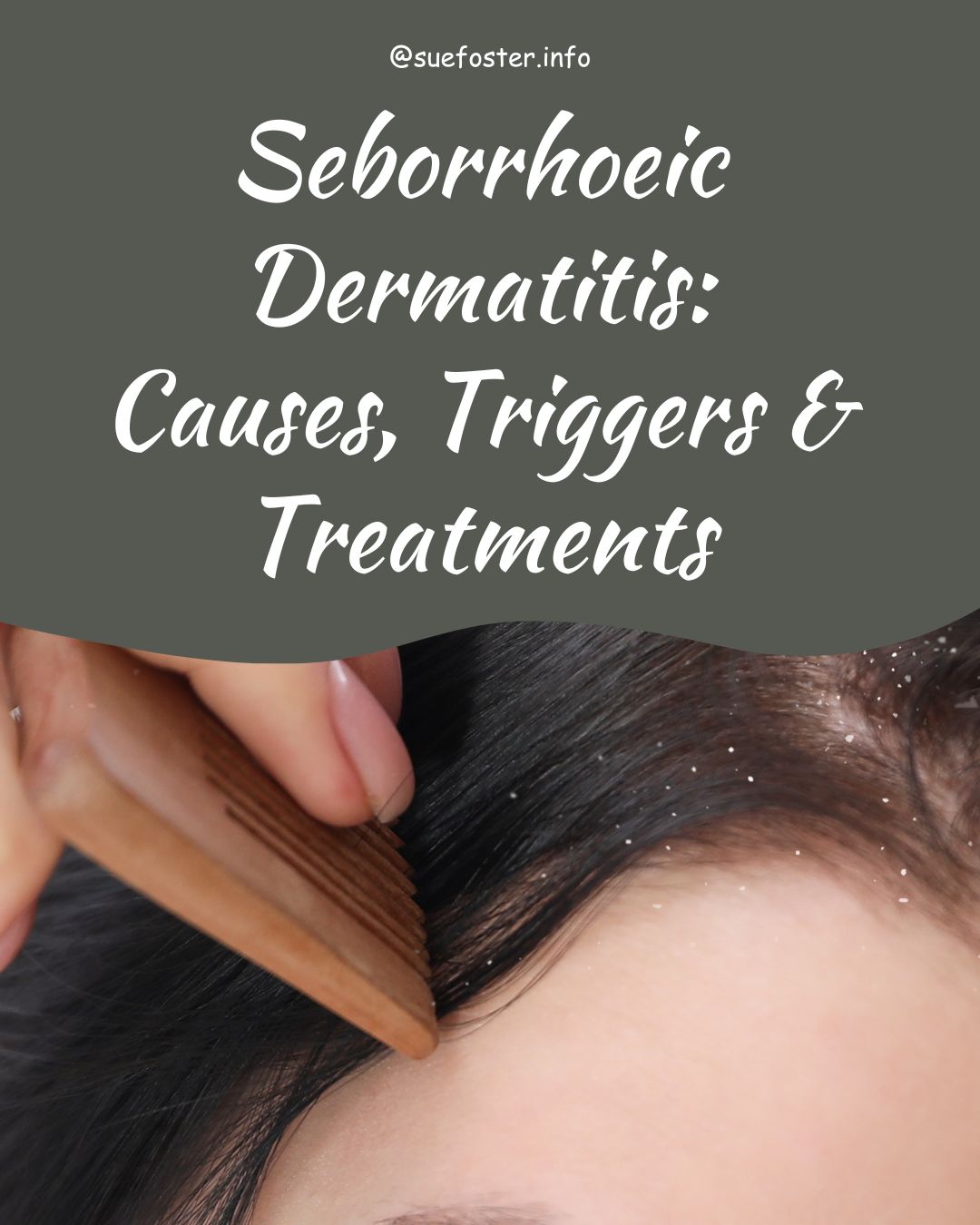
Seborrhoeic dermatitis is a common skin condition that can cause redness, itching, irritation and flaky or greasy patches of skin. It often affects the scalp, eyebrows, sides of the nose and ears, although it can also appear on the chest and other areas of the body.
If you have it, you’ll know how frustrating it can be. Symptoms can improve for a while, only to return again, sometimes without an obvious reason.
I have seborrhoeic dermatitis myself, so I understand how difficult it can be to manage. I haven’t found a way to clear it completely, but I’ve been looking into the condition, what causes flare-ups and the treatments that can help keep symptoms under control.
In this guide, I’ll look at possible causes, common triggers, treatments you can try at home and the difference between medical treatments and natural remedies.
What is seborrhoeic dermatitis?
Seborrhoeic dermatitis is a long-term inflammatory skin condition that commonly affects areas where the skin produces more natural oil (sebum).
It can cause:
- Red or inflamed patches of skin.
- White or yellowish flakes.
- Greasy or scaly areas.
- Itching and irritation.
- Dry-looking skin that may also feel oily.
- Dandruff or scaling on the scalp.
On the face, it commonly appears around the eyebrows, between the eyebrows, beside the nose, around the hairline and behind the ears.
It isn’t caused by poor hygiene, and it isn’t contagious. You cannot catch it from another person.
What causes seborrhoeic dermatitis?
The exact cause isn’t fully understood, but a type of yeast called Malassezia, which naturally lives on everyone’s skin, is thought to play an important role.
This yeast feeds on oils produced by the skin. In people who develop seborrhoeic dermatitis, the skin appears to react to the yeast, causing inflammation, redness and flaking.
Other factors may influence whether someone develops the condition or how severe it becomes, including:
- Skin oil production: Seborrhoeic dermatitis tends to affect areas with more oil-producing glands.
- Genetics: Some people may be more prone to developing the condition.
- Immune system factors: Changes in immune function can influence the severity of symptoms.
- Certain medical conditions: Seborrhoeic dermatitis is more common in people with some neurological conditions, including Parkinson’s disease, and can be more severe in people with weakened immune systems.
Having seborrhoeic dermatitis doesn’t mean your skin is dirty or that you aren’t washing properly.
What triggers a seborrhoeic dermatitis flare-up?
Although the underlying cause isn’t completely understood, certain things can make symptoms worse.
Common triggers include:
Stress: Stress is a recognised trigger for flare-ups. You may notice your skin becomes more irritated during particularly stressful periods.
Cold and dry weather: Many people experience worse symptoms during winter and early spring. Warmer, more humid weather may improve them.
Illness and tiredness: Being unwell or run down can sometimes coincide with a flare-up.
Harsh skincare products: Strong cleansers, fragranced products and irritating ingredients can aggravate already sensitive skin.
Changes in skincare or haircare routines: Trying several new products at once can make it difficult to identify what is irritating your skin.
Keeping a simple record of flare-ups may help you identify patterns and work out whether particular products, weather conditions or lifestyle factors affect your symptoms.
What is the fastest way to get rid of seborrhoeic dermatitis?
There isn’t an instant cure, but antifungal treatments are commonly used because they help reduce the Malassezia yeast associated with the condition.
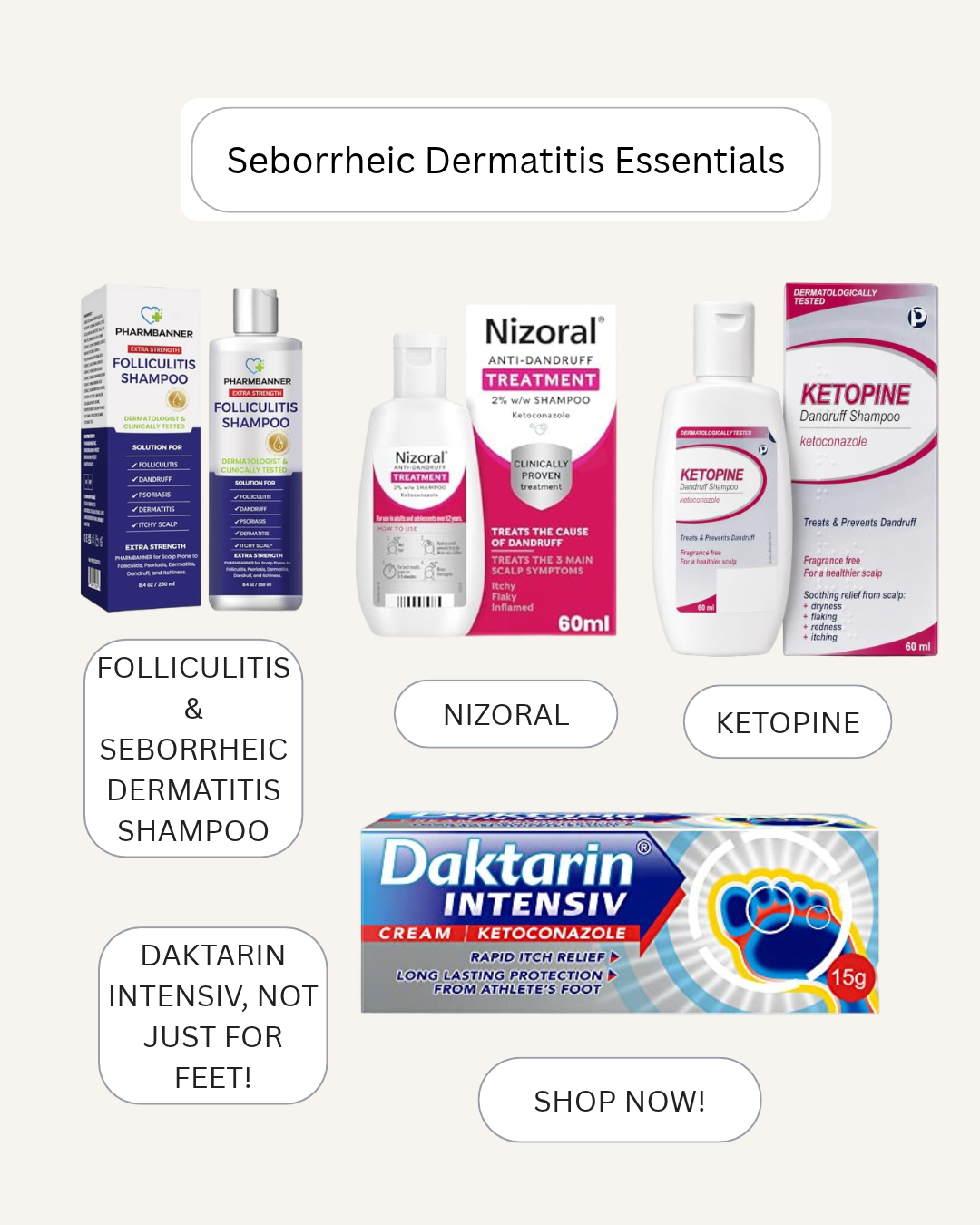
For the scalp, medicated shampoos containing ketoconazole or selenium sulphide can help reduce flaking, itching and irritation.
For the face, antifungal creams such as ketoconazole may be recommended.
Ketoconazole cream and shampoo generally take around two to four weeks to work. Follow the instructions supplied with the product, as different preparations have different directions for use.
If inflammation is particularly troublesome, a GP may recommend an additional short-term treatment to settle it.
Best treatment for seborrhoeic dermatitis on the scalp
If you have seborrhoeic dermatitis on your scalp, an ordinary shampoo may not be enough to control the flaking and irritation.
Medicated shampoos are often the first treatment to try.
Common ingredients include:
- Ketoconazole: An antifungal ingredient that reduces the yeast associated with seborrhoeic dermatitis.
- Selenium sulphide: Helps control flaking and the growth of yeast.
- Zinc pyrithione: Used in some anti-dandruff preparations to help control scaling.
- Salicylic acid: Helps loosen and remove built-up scales.
Ketoconazole shampoos, such as Nizoral, are available from pharmacies in the UK.
Follow the product instructions carefully. Some medicated shampoos need to remain on the scalp for several minutes before rinsing.
Once symptoms improve, you may need to continue using a suitable medicated shampoo occasionally to help prevent flare-ups from returning.
If your scalp remains very itchy, inflamed or scaly, speak to a pharmacist or GP. They may recommend a prescription scalp treatment.
Natural remedies for seborrhoeic dermatitis on the scalp
It is understandable to want a gentler or more natural way to manage the condition, particularly if you have recurring symptoms.
However, natural remedies are not necessarily safer or more effective than medical treatments. Evidence for many popular remedies is limited.
Some approaches that may help support scalp care include:
Gentle shampooing
Use a mild shampoo between medicated washes if needed. Avoid scrubbing the scalp aggressively, as this can increase irritation.
Avoid scratching
Scratching may damage the skin and make inflammation worse. Try not to pick at flakes or scales, even when they are tempting to remove.
Be careful with oils
Some people use coconut oil to soften dry scales, but oils are not a proven treatment for seborrhoeic dermatitis. Heavy or greasy products may not suit everyone, so stop using them if symptoms worsen.
Avoid undiluted essential oils
Tea tree oil and other essential oils can irritate the skin or cause allergic reactions. They should not be applied undiluted to an affected scalp.
Does MCT Oil Help Seborrhoeic Dermatitis?
I’ve been reading about MCT oil as a possible way to manage seborrhoeic dermatitis, particularly products containing C8 and C10 fatty acids.
MCT stands for medium-chain triglycerides. These are types of fatty acids, and C8 (caprylic acid) and C10 (capric acid) are two of the main types found in MCT oil.
The interest in these oils comes from the fact that seborrhoeic dermatitis is associated with a naturally occurring yeast called Malassezia. This yeast uses certain fats as a food source, and some research and online discussions suggest that the type of oil used on affected skin may make a difference.
C8 and C10 MCT oils are often recommended in discussions about seborrhoeic dermatitis because they are thought to be less likely to feed the yeast than some other oils. However, there isn’t enough clinical evidence to confirm that applying MCT oil will treat or clear the condition.
If you are considering trying it, check the ingredients carefully. Look for a product containing C8 and C10 rather than assuming all coconut-derived oils or ordinary coconut oil are the same. Avoid products with added fragrances or essential oils if your skin is sensitive.
It’s also worth patch-testing any new product on a small area first. Stop using it if you notice increased redness, itching or irritation.
MCT oil is an interesting option that I’ve come across while researching ways to manage seborrhoeic dermatitis, but I wouldn’t consider it a replacement for established treatments such as antifungal creams or medicated shampoos.
More research is needed to establish whether it genuinely helps people with this condition.
Best treatment for seborrhoeic dermatitis on the face
Facial seborrhoeic dermatitis can be particularly frustrating because redness and flaking are often difficult to conceal.
The skin on the face is more delicate than the scalp, so it is important to avoid harsh treatments.
A suitable treatment plan may include:
- An antifungal cream such as ketoconazole.
- A gentle, soap-free cleanser.
- A light, fragrance-free moisturiser.
- Avoiding products that cause stinging, burning or increased redness.
Antifungal creams help address the yeast associated with the condition, while moisturisers can support the skin barrier.
If your face is very inflamed, a GP may prescribe a mild steroid cream for a short period. Steroid creams should not be used on the face for prolonged periods without medical advice, as they can cause skin thinning and other side effects.
If your symptoms don’t improve, ask your GP to review the diagnosis and treatment.
Natural remedies for seborrhoeic dermatitis on the face
When the condition affects your face, it can be tempting to try all sorts of home remedies. However, irritated skin often responds better to a simple routine than lots of different products.
Some useful measures include:
Use a gentle cleanser
Choose a soap-free cleanser that doesn’t leave your skin feeling tight or stripped.
Apply a light moisturiser
A fragrance-free moisturiser can help keep the skin comfortable and support its protective barrier.
Avoid exfoliating
Scrubs, cleansing brushes and strong exfoliating acids can aggravate inflamed skin.
Be cautious with natural ingredients
Lemon juice, vinegar, baking soda and essential oils are sometimes suggested as home remedies, but they can irritate the skin. I wouldn’t recommend experimenting with these on an already inflamed face.
There is no well-established natural remedy that permanently gets rid of seborrhoeic dermatitis.
What should you not put on seborrhoeic dermatitis?
When your skin is irritated, some everyday beauty and skincare products can make matters worse.
It is worth avoiding or being particularly cautious with:
- Fragranced skincare products.
- Alcohol-heavy toners.
- Harsh soaps and facial cleansers.
- Physical exfoliating scrubs.
- Strong acids and retinol products on inflamed areas.
- Undiluted essential oils.
- Lemon juice and undiluted vinegar.
- Products that leave your skin feeling hot, tight or uncomfortable.
You don’t necessarily have to avoid every one of these ingredients forever, but it is sensible to keep your routine simple while your skin is flaring up.
Introduce new products one at a time so you can identify anything that causes irritation.
How can you reduce seborrhoeic dermatitis naturally?
Although natural approaches cannot cure the condition, some everyday habits may help reduce irritation and support healthier skin.
Consider the following:
- Manage stress where possible. Stress is a recognised trigger, so making time to relax may help reduce flare-ups.
- Get enough sleep. A regular sleep routine can support general health and wellbeing.
- Eat a balanced diet. Include a variety of fruit, vegetables and other nutritious foods. There is no specific diet proven to cure seborrhoeic dermatitis.
- Protect your skin from irritation. Use gentle products and avoid excessive washing or scrubbing.
- Notice your triggers. Keep track of when symptoms become worse and whether there is a pattern.
- Maintain a suitable treatment routine. If a medicated shampoo or cream helps, continue using it as directed rather than stopping as soon as symptoms improve.
These measures are best viewed as ways to support treatment rather than replacements for it.
How can you cure seborrhoeic dermatitis permanently?
Unfortunately, there is currently no guaranteed permanent cure for seborrhoeic dermatitis.
It is a chronic condition, which means it can come and go over time. Some people experience long periods without symptoms, while others have regular flare-ups.
Treatment aims to control the yeast, reduce inflammation and keep the skin comfortable.
Even when your skin clears, symptoms may return when treatment is stopped. Some people therefore need occasional maintenance treatment, such as using an antifungal shampoo once a week or as advised by their healthcare professional.
If a treatment stops working or your symptoms keep returning, speak to your GP or dermatologist about other options.
When should you see a GP?
You don’t have to put up with persistent itching, redness and flaking.
Speak to your GP if:
- You aren’t sure whether you have seborrhoeic dermatitis.
- Symptoms are severe or widespread.
- Your skin is painful, swollen or weeping.
- You develop signs of infection, such as increasing pain, warmth or pus.
- Over-the-counter treatments aren’t helping.
- The condition is affecting your confidence or quality of life.
Other skin conditions, including psoriasis, eczema and rosacea, can sometimes look similar. Getting the correct diagnosis is important because the treatments may differ.
To Conclude
Seborrhoeic dermatitis can be a frustrating condition to live with, particularly when you think you’ve finally got it under control and another flare-up appears.
There is no magic home remedy that works for everyone, and claims of permanent cures should be treated with caution.
The best approach is usually a combination of suitable medicated treatment, gentle skincare and working out what makes your own symptoms worse.
I still haven’t found a way to clear my seborrhoeic dermatitis completely, but understanding the condition and knowing which treatments are available is a useful starting point. If you have it too, remember that you’re not alone, and you don’t have to manage persistent symptoms without seeking help.
This article is for general information only and is not a substitute for medical advice or a professional diagnosis.
Pin Me!